We are re-Christianising.
They told us religion wasn’t going to be important in 21st Century politics. They couldn’t have been more wrong.

At the turn of the millenia, we were assured that religion, outdated and judgemental, would fade. That as the 21st century matured - more educated, more technological, more “enlightened” - faith would retreat politely from public life. Politics would be conducted in the clean, rational language of economics, security, and rights. God would be, at most, a private hobby.
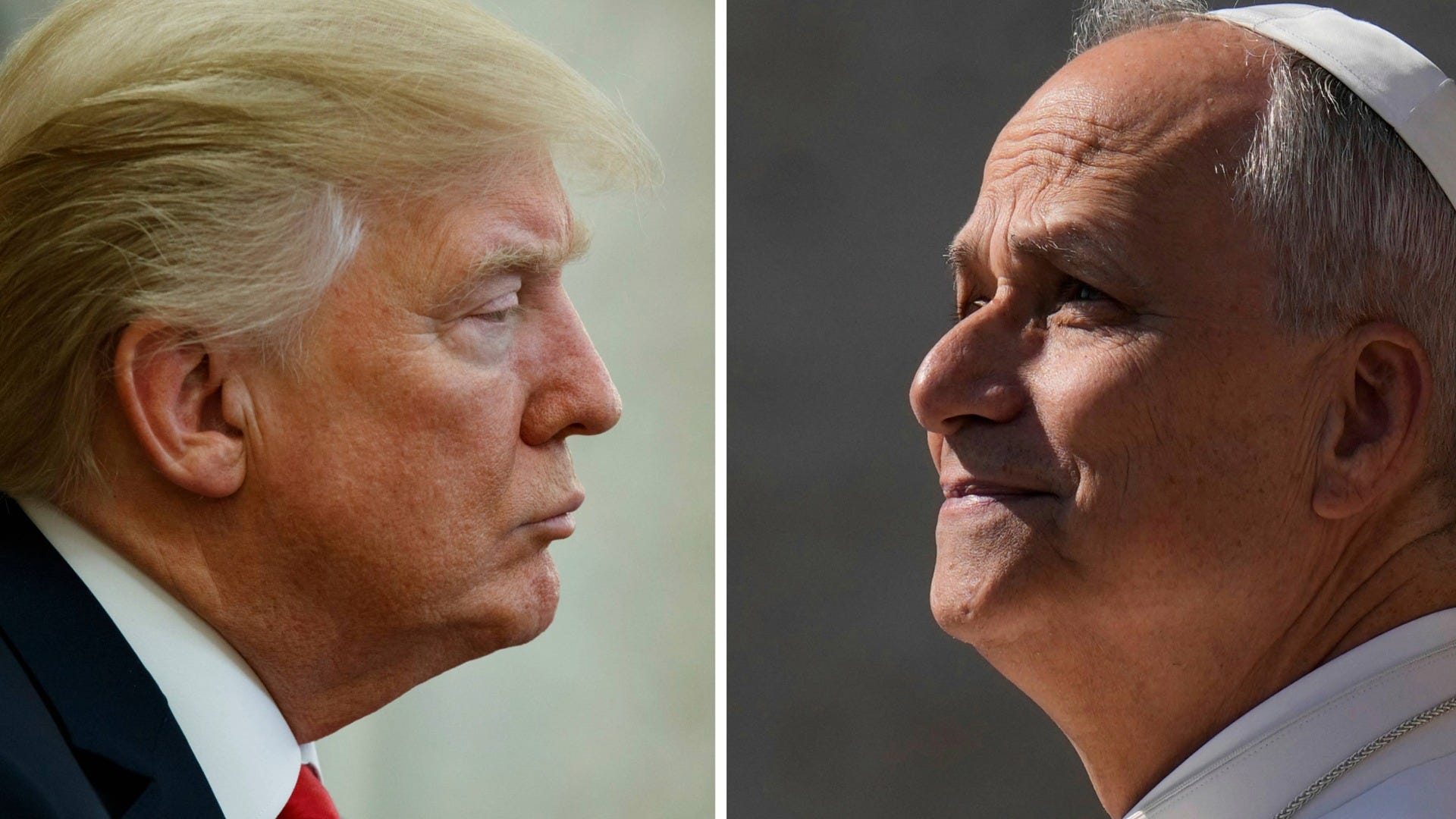
And yet, here we are: watching the most powerful man in the world locked in a very public theological quarrel with the Bishop of Rome over the moral limits of power.
In recent days, Donald Trump has escalated his attacks on Pope Leo XIV, dismissing him as “weak” and accusing him of naïveté over Iran. The Pope, for his part, has not returned fire in kind - but nor has he retreated. Instead, he has issued a simple statement: “God does not bless any conflict.” That principle might not actually hold true in all cases. But regardless, for all Trump has been through, he has never faced a challenge to his support base like this.
This is more significant than a mere spat - it marks the unexpected reappearance of religion as a major force in geopolitics.
The divergence between Trump’s rhetoric and Christian principles has been deepening for weeks – including talk of unleashing “hell,” and threatening that an “entire civilisation” would “die” at the hands of U.S. forces. Simultaneously, the Secretary of War and others in the administration lean heavily on the idea that this is a Holy War against “apocalyptic” enemies. The idea that entire civilisations should be punished because of enemy governments flies directly in the face of the idea of the Imago Dei (that all civilians, even in enemy territory, bear the image of God). That principle doesn’t forbid war, but it does restrain it to be targeted, limited, just, and respectful of the lives of innocents.
When Trump relished in threats of catastrophic destruction, Leo called it “truly unacceptable.” When American officials wrapped violent and indiscriminate military action in Christian language, he pushed back: Christianity cannot be conscripted into the service of violence.
What we are witnessing is the language of two entirely different kingdoms. Yet America, a self-proclaimed Christian nation, has long professed to honour the heavenly one above the earthly.
For all the talk of secularisation, liberal democracies have not outgrown the need for moral limits. Moral frameworks can’t be based on the moving goal posts of vibes and feelings, but must be built on foundational truths.
The Pope has often felt like an abstract, soft, even irrelevant entity to those outside the Catholic faith. He has no army. No electorate. No economic leverage. For evangelicals and others on the protestant side of the Church aisle, he has no theological relevance. And yet, he has something rare: the ability to say “no” on the world stage without playing politics.
Trump is accustomed to opposition that can be measured and leveraged - votes, ratings, approval numbers. But Leo is playing a different game entirely. Hard morality can’t be measured in strategy and pay-offs. That’s dangerous to Trump, because it can’t be bargained with.
You cannot negotiate with the claim that every human life has inherent dignity. You cannot spin your way out of the suggestion that threatening civilians violates something deeper than international law. All Trump can do is throw insults. That might appeal to his base, but it doesn’t wash with the rest of the world.
The great irony, of course, is that this moment was supposed to be impossible by now. For decades, we were told that religion would become politically irrelevant. That modernity would dissolve it into a mere cultural remnant. But instead, what we are witnessing is something closer to a reversal.
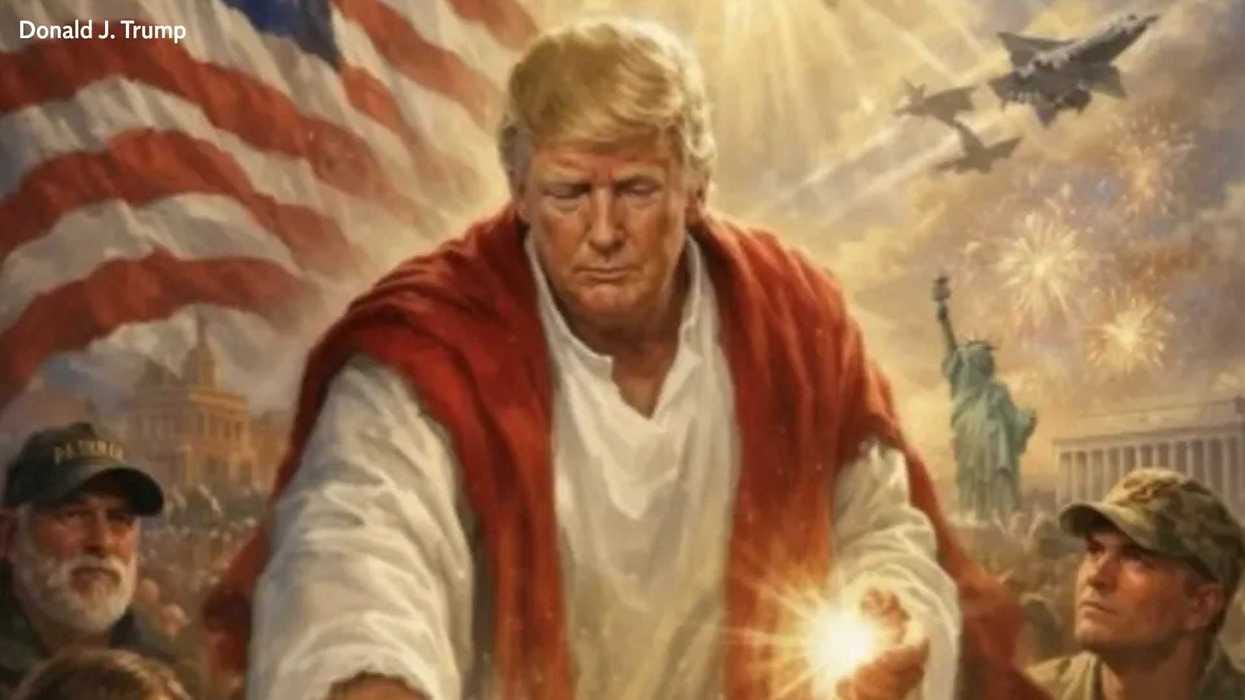
When Trump posted an AI-generated image of himself as a Christ-like figure, it was widely dismissed by his supporters as tasteless provocation. But the backlash it triggered - especially among Christians - suggested something deeper. People still know, instinctively, that there is a line that cannot be crossed by earthy leaders.
This is where the question becomes uncomfortable - particularly for those Christians who have supported Trump. Many did so with good reason: the protection of unborn life, the defence of children, the preservation of religious liberty. These are not trivial concerns; they are matters essential to human flourishing.
The same framework that leads a Christian to defend the unborn must also shape how they think about war, rhetoric, and the treatment of enemies. The same belief in human dignity cannot stop when it is applied to non-Americans in far off lands. It is perfectly consistent to have voted for Trump in 2024 on the grounds of a Christian worldview, and to criticise him now in 2026 based off of the very same framework.
What Leo has done is force that consistency into the open.
Christianity insists that the strong are accountable, that the weak matter, and that no nation - however exceptional - is exempt from moral scrutiny. The power of the Church lies in the consistency of teachings, no matter the party in charge of any country at any time. That, perhaps, is why young people in droves – sick of the shifting sands of post-liberalism – are searching again for a belief system founded on unchanging truth.
And that is why, in this strange and volatile chapter of global politics, the Church has become one of the few forces capable of standing opposite the leader of the free world – and saying “no”.